Peas contain 5.2 grams of protein per 100 grams, making them a good source of protein. It is a fine vegetable protein that is suitable as a side dish as well as the main ingredient in a vegetarian meal.
✅ Peas are 100% vegan
Protein in peas
Peas are naturally rich in protein. Dried yellow and green peas have the same protein content.
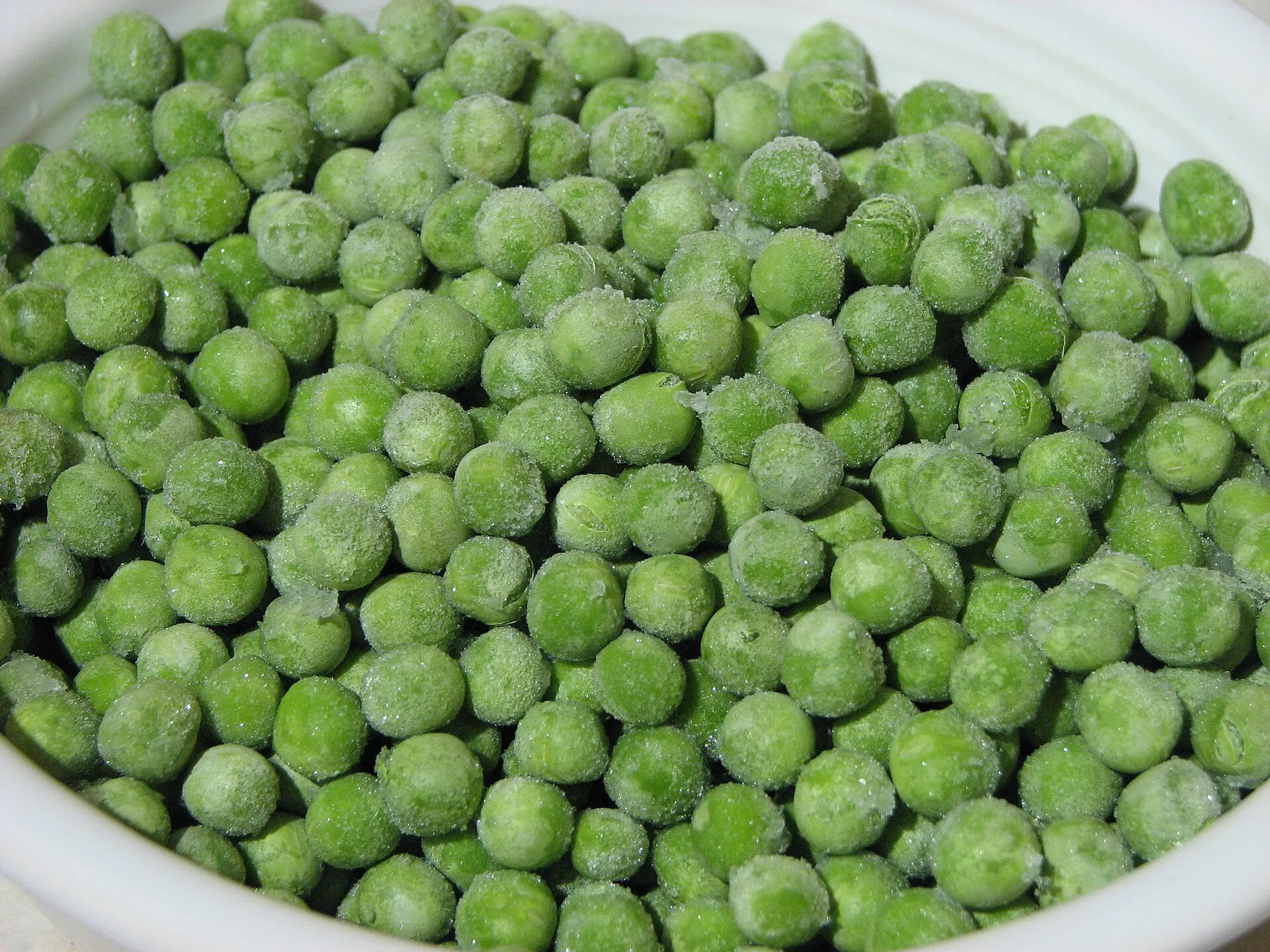
- Ordinary frozen green peas contain about 5.2 grams of protein per 100 grams
- Pea protein mince contains 26.6 grams of protein
- Dried peas contain 21.5 grams of protein
- Boiled yellow peas contain 8.4 grams of protein
How much pea protein costs
Peas have long been a cheap source of protein. When we compared Swedish shop prices in August 2021, 100 grams of protein from frozen peas cost about 26 Swedish kronor, or about 3 US dollars at the August 2021 average rate of 8.68 kronor per dollar.
Here’s how the price of pea protein compared to other common protein sources then. Prices have changed since, so see the table as a comparison and not as today’s prices:
| Approximate price per 100 g protein (USD), August 2021 | |
| Oatmeal | 1.2 |
| Frozen peas | 3.0 |
| Egg | 3.2 |
| Beef mince | 5.6 |
| Red kidney beans | 6.2 |
| Frozen soya beans | 11 |
How many peas you need to eat to get enough protein
Peas contain quite a lot of protein, but not enough to meet your entire daily protein requirement.
Here’s how much frozen peas you need to eat to get enough protein:
| Training | 60 kg | 75 kg | 90 kg |
|---|---|---|---|
| Low (1 g/kg) | 1154 | 1442 | 1731 |
| Medium (1.3 g/kg) | 1500 | 1875 | 2250 |
| Hard (1.6 g/kg) | 1846 | 2308 | 2769 |
Please read our review on how much protein is needed daily for different people too!
How to get enough protein with peas
Even if you’re relatively light and don’t exercise, you’ll need to eat more than a kilo of peas a day to cover your entire protein requirement.
That’s not sustainable.
One way around this problem is to buy peas in the form of mince. Pea protein mince contains 26.6 grams of protein per 100 grams. That’s actually more than in ordinary beef mince, which has about 20 grams!
Pea protein as a food supplement
Another way to make use of this beneficial vegetable is by buying vegan protein powder that is based on peas.
- Like other legumes, peas contain more of the amino acid lysine than cereals do
- Contains less methionine and cysteine – combine it with cereals, so they complement each other
- Suitable for blending into smoothies
Allergy
Note: be aware that peas are a legume and may cause an allergic reaction in some individuals. This also applies to pea protein, which is found in many vegetarian products.
Other benefits of peas
Peas are not only a good source of protein. Frozen green peas contain 83 µg folate, 23 mg vitamin C, 0.21 mg thiamine and 4.4 g fibre per 100 grams. Food from plants also generally has a lower climate impact per kilo than food from animals, and dried legumes such as yellow peas keep a long time with little waste:
- High in folate
- Source of vitamin C
- Source of thiamine (vitamin B1)
- Fibre – 4.4 g per 100 g
- Plant foods generally have a lower climate impact than animal foods
Sources
- Swedish Food Agency, food composition database: Green peas, frozen
- Swedish Food Agency, food composition database: Green or yellow peas, dried
- Swedish Food Agency, food composition database: Yellow split peas, boiled
- Swedish Food Agency, food composition database: Pea protein mince
- Swedish Food Agency, food composition database: Beef mince, raw
- Swedish Food Agency: Protein (in Swedish)
- Swedish Food Agency: Legumes and peanuts – allergy (in Swedish)
- Swedish Food Agency: Vegetables, legumes and fruit – environment (in Swedish)
- https://en.wikipedia.org/wiki/Pea
Bildkällor
- Frozen green peas with a thin layer of frost in a white bowl: Jina Lee, CC BY-SA 3.0 · Wikimedia Commons · Licens